More than twenty years ago, Jorge Torres was diagnosed with diabetes. For the most part, he felt like he was managing it well. He would think to himself, “It’s okay, it’s not that serious a disease.” His mom and brother also had diabetes, and they seemed fine. And though his blood sugar levels were high, he didn’t experience too many symptoms.
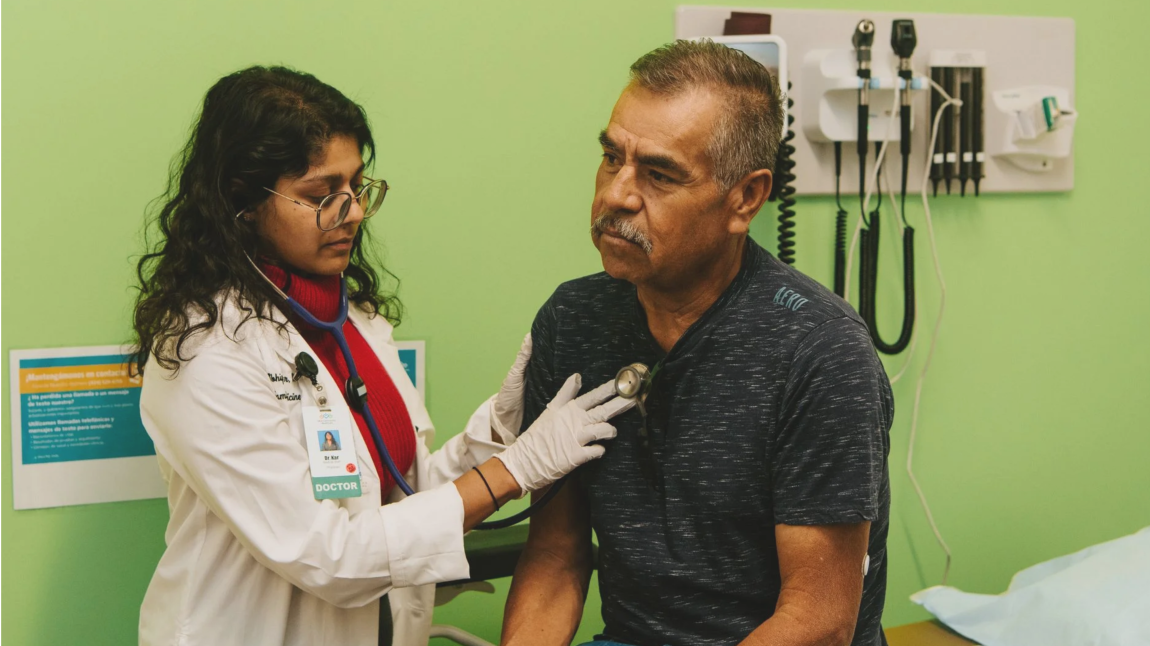
That began to change not long after Jorge became a patient at MLKCH’s East Compton clinic in 2025. His primary care doctor, Dr. Abhipsa Kar, saw that his blood sugar levels were dangerously high. His eyesight was beginning to deteriorate, and his kidney function, too, as a result. She referred him to a special program at MLKCH.
Then came the real wakeup call: Jorge found himself in agonizing pain. For nine days, he battled acute kidney failure in the hospital, unsure of when he would recover.
Monica Garcia likes to meet her patients face to face. “I want them to see me physically,” she says. “And their body language is important, too. I can see how they’re feeling, see how I can try to relate.” As a nurse and care manager at MLKCH, it’s her role to show up in moments when patients are at their most vulnerable, and to ask them to trust her with the next steps of their care.
She first met Jorge while he was hospitalized. The program Dr. Kar had referred him into was intensive care management at the Diabetes Management Center of Excellence. All patients at MLKCH with diabetes and elevated blood glucose levels are offered enrollment in the program, which follows a coordinated care model. Instead of asking patients to navigate fragmented parts of confusing healthcare resources on their own, the program coordinates care across medication, preventive screenings, education, specialty visits, and more. Those deemed at highest risk—those with Type 1 diabetes, gestational diabetes, or with A1c levels above 9%—are given even more intensive support.
At the time that Jorge was hospitalized, his A1c levels were at 15% (patients with levels under 7% are considered to have their diabetes under control.) He was not regularly attending his doctor appointments. The nine days fighting kidney failure at MLKCH changed that though. “It opened my eyes,” he says. He knew that he needed to accept the help that Monica and MLKCH were offering.
Monica and Jorge have now worked together for more than a year and a half. “At the beginning, he was not at all compliant,” says Monica, laughing. Though the hospitalization had been a wakeup call for Jorge, Monica still had to earn his trust. Like many patients in South LA of his demographic—Latino, male, older—Jorge had strong distrust in the medical system, and had spent most of his life avoiding doctor visits.
But his diabetes management team’s actions began to slowly change his mind. His kidney doctor, Dr. Jonathan Cheng, checked in with him daily at the hospital. And Monica’s continual presence, not only during his hospitalization, but in following up afterwards, helped him believe that the healthcare system “wanted his trust, would care for him, and wanted to help me,” says Jorge. His team, like others in the program, also included a clinical pharmacist, care coordinators, diabetes nurse specialist, and community health worker. It definitely helped that many of his providers, including Monica, were Spanish-speaking. It made it easier for Jorge to ask questions, express his needs, and feel heard.
Monica made sure that Jorge attended all of his appointments—calling him to remind him, showing up with him if he was feeling anxious. She pressed home the importance of taking all of his medications consistently. Dr. Kar talked to him about benefits of strength training, and showed him exercises that he could do. He now walks in a local park for at least an hour every day, supplemented by half an hour on a bicycle. In the last month, he’s started lifting weights three to four times a week, after learning how beneficial it was for his bones. And he’s been cooking and eating healthier, too.