Social Medicine
Social medicine is a core component of the MLKCH residency experience. Residents will explore a wide range of topics related to health equity, including:

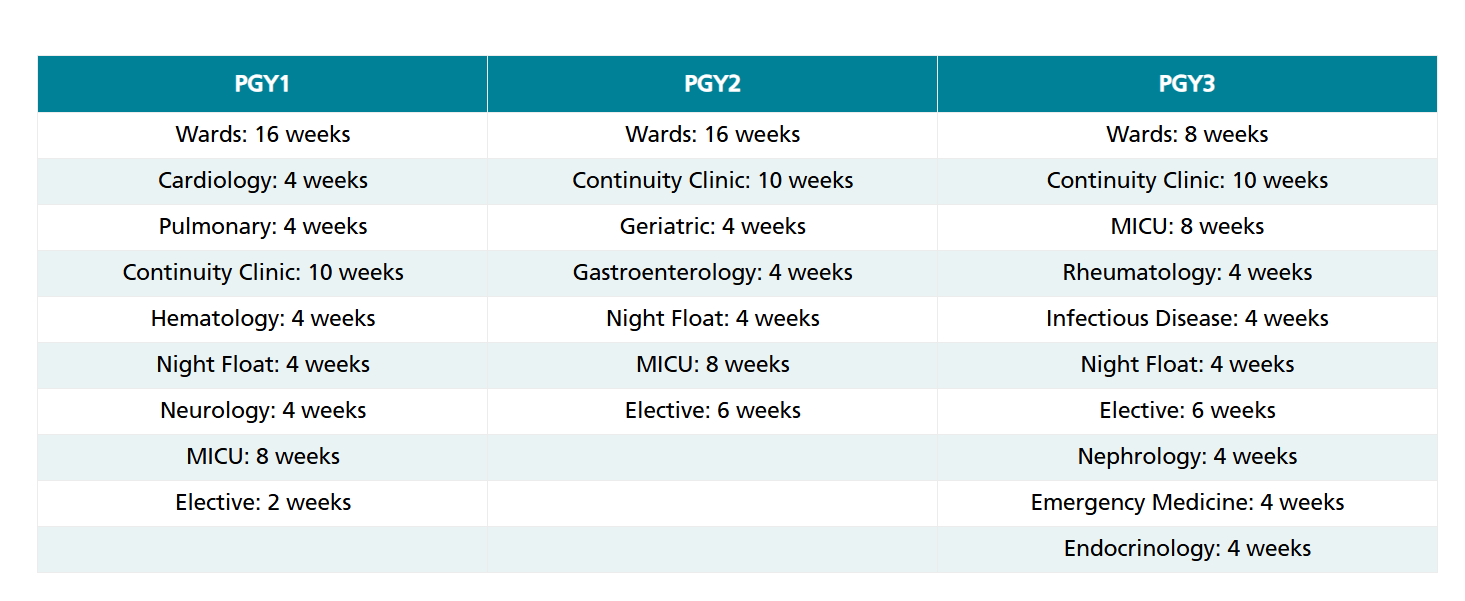
Our clinical training experience is based at Martin Luther King Jr. Community Hospital in South Los Angeles. Residents rotate through core rotations including General Medicine Wards and Critical Care, as well as subspecialties such as Endocrinology, Pulmonary Diseases, Cardiology and Infectious Diseases. We have partnered with local academic centers for certain specialty rotations.
(see below).
This hybrid model combines community-based training with experience in tertiary and quaternary settings, exposing residents to advanced therapies and diverse clinical approaches that they can bring back to enrich patient care in our community-based clinical setting and beyond.
Each 4-week block is followed by a week of Ambulatory Care, which includes the residents’ Continuity Clinic, Telemedicine, Urgent Care visits and Street Medicine. Residents also have protected time to pursue scholarly activities including quality improvement and research projects during this week.
Cedars-Sinai: Hematology/Oncology, Gastroenterology, Supportive Medicine (Palliative Care and Hospice)
Harbor-UCLA: Neurology and General Internal Medicine Wards
UCLA-Ronald Reagan: Coronary Care Unit, Geriatrics, Nephrology and Rheumatology
Multidisciplinary Bedside Rounds – Under the guidance of our faculty, residents will learn to lead daily bedside teaching rounds and hone their clinical skills, diagnostic reasoning, knowledge of pathophysiology, professionalism and compassion.
Continuity and specialty clinics – Residents will assist/engage directly with attending’s on specialty care needs relevant to internal medicine, including cardiology, endocrinology, pulmonology and more.
Community-based care – Work on data-driven, community-based population health initiatives.
Social medicine is a core component of the MLKCH residency experience. Residents will explore a wide range of topics related to health equity, including:
